
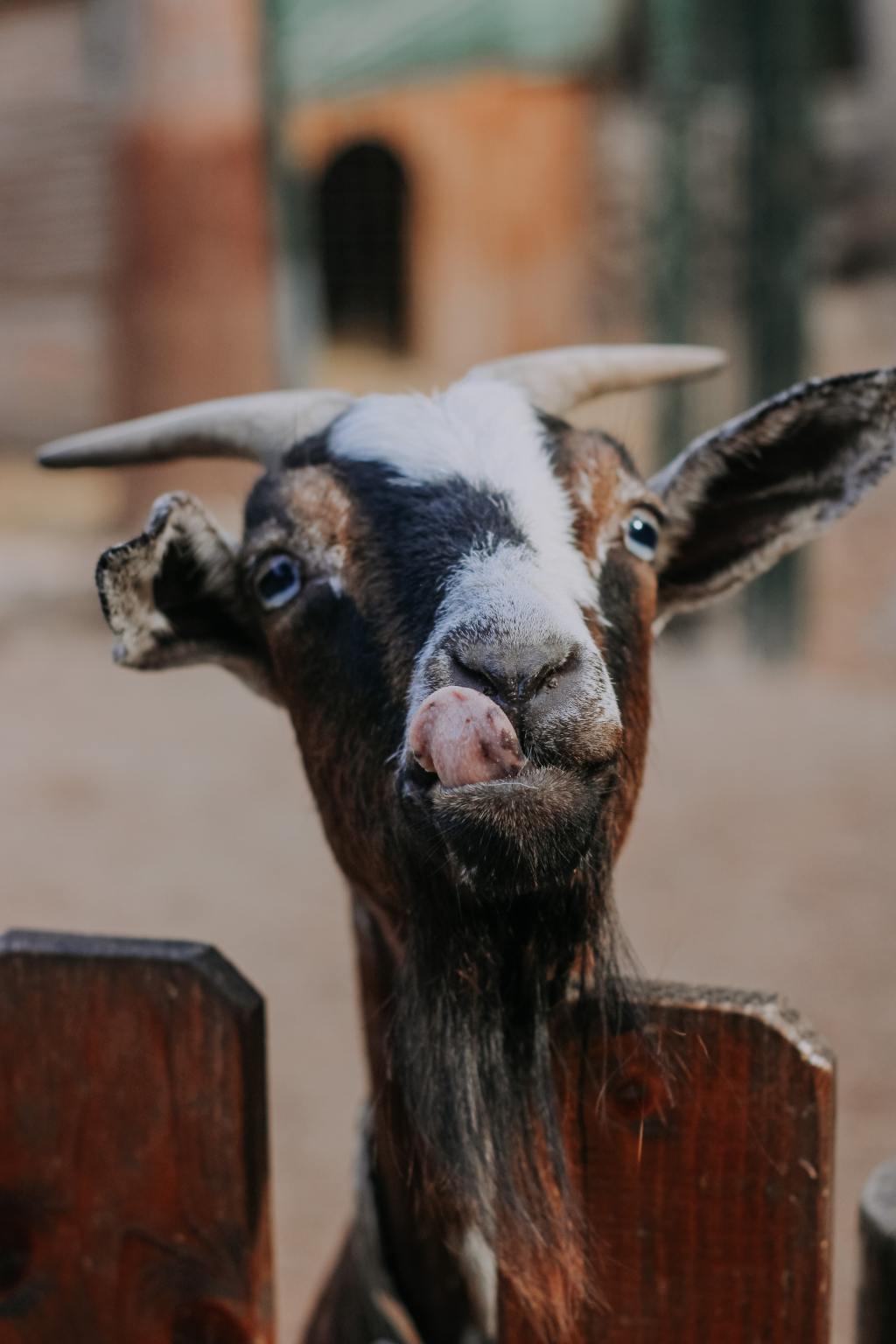
At first glance, The wolf and the seven little kids is strikingly similar to the fable of The three little pigs. The latter appeared in an English book of fairy tales somewhat later, but both stories likely have much older roots, so who knows which really came first. Regardless, the plot is pretty straightforward and has some important lessons to teach. Let’s explore.
A mother goat lives with her seven kids in a small house. There’s no mention of a father, which makes sense, as bucks lead solitary lives. On the day in question, the mother goat needs to go grocery shopping and decides to leave her kids at home. Now, your immediate reaction might be that it’s irresponsible for her to leave her kids unattended, but anyone who has been in the presence of whiny and screaming children at the grocery store knows her plight. I digress. She warns her kids that there is a wolf lurking about who wants to eat them, and is prone to disguise himself. However, she explains what signs to look for in his appearance, so as to spot him, and leaves reassured.
It doesn’t take long for there to be a knock on the door; it of course being the wolf, pretending to be the mother. I’m assuming that the door latches on the inside, or you would think that the mother could just let herself in with a key, sparing her children this potentially life-threatening responsibility. Either way, the kids can hear that the wolf has a deep voice and proudly proclaim that they can see right through him, because “momma didn’t raise no fool”. OK, that’s not a direct quote, but you get the point. The wolf leaves, but returns after having swallowed some chalk to soften his voice (that was the first method that came to my mind as well). The kids remain unimpressed, since they can see his black paws through the crack of the window. The wolf retreats again, this time covering his paws in plain flour. With chalk in his throat and flour on his feet, the disguise is complete. He returns a third time and asks to be let in. The kids have no reason to doubt him this time and open the door. Surprise, surprise! It’s the wolf, who proceeds to swallow six kids whole (one of them manages to remain hidden). The wolf then decides to take a nap close by, presumably due to food coma. Meanwhile, the mother goat returns to find the scene of the crime, and cries out for her kids in despair. The lone survivor appears and recounts the events. Together, they locate the wolf, perform surgery on his stomach to let the other kids out, fill his stomach with stones and stitch up the wound. The wolf doesn’t wake up at any point during this procedure, which leads me to believe that they used a strong anesthetic, possibly propofol. Regardless, the wolf eventually wakes up and goes to the lake for a drink of water. As he leans forward to take a sip, the heavy stones cause him to fall forward into the lake and drown. The end.
You might be thinking that the moral of this story is obvious; be wary of strangers in case they harm you. However, after careful analysis, I have concluded that this hypothesis only makes sense if the wolf had gotten away with the crime. The kids ended up safe and sound in the end, whereas the wolf ended up dead. So, if anything, the story is a cautionary tale for the wolf, not the kids. Indeed, it’s quite interesting that the kids only survived because of sheer luck; luck that one kid got away and was able to summon help, and luck that the wolf swallowed the other kids whole. With that in mind, I propose the following alternative moral to the story: if you commit mass murder, be thorough and don’t leave witnesses, and always remember to chew your food completely before swallowing.
 Sorobetea